Storage space or the simple act itself needs an anchor. The space before anything must breathe life and this life in turn demands room and classification.
If the temporal space is made of physical elements, the storages are a skin, self adjusting, evolving and dynamic.
Which raises a fair question: can it really be reduced to a purely utilitarian role?
Storage Is Not Secondary
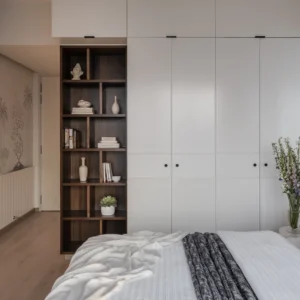
Courtesy: Greenhatcch Studio
It often enters conversations late, tagged onto drawings once the “real” design feels complete.
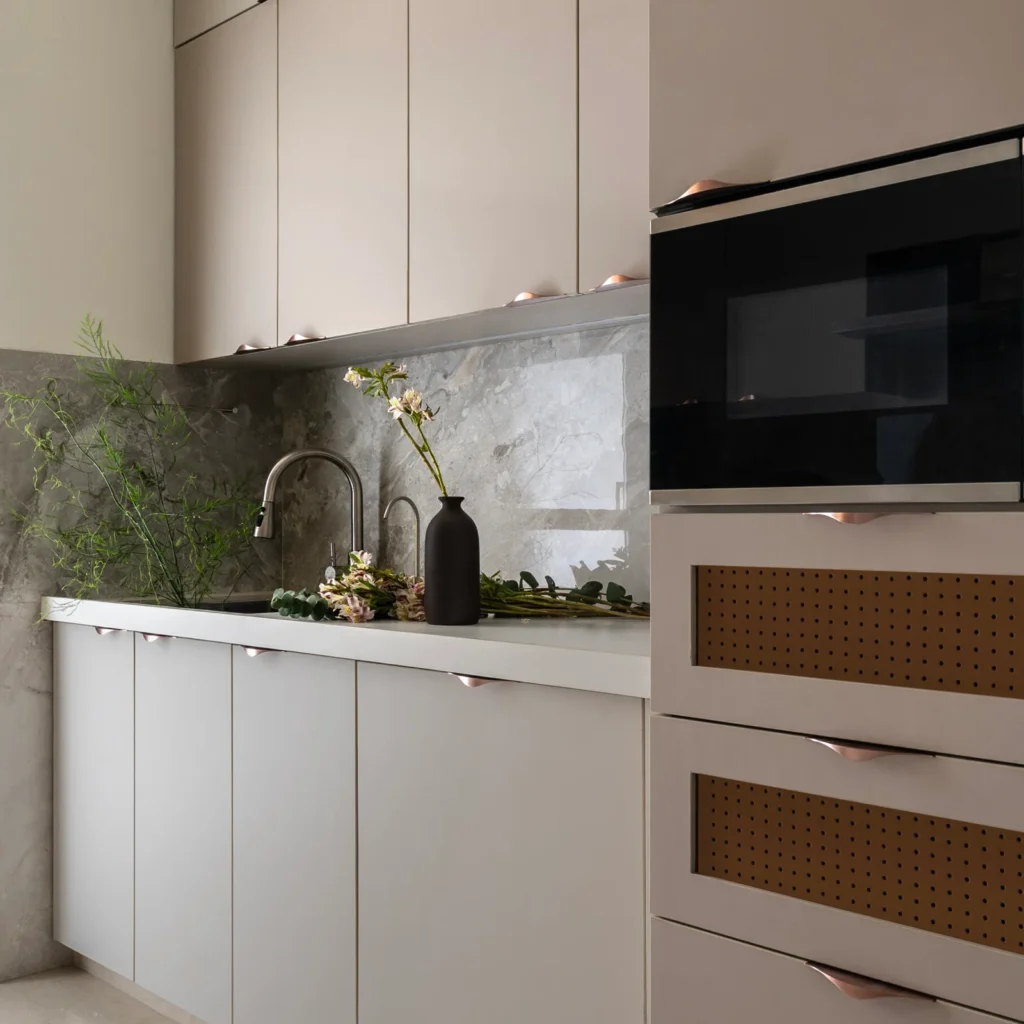
But step into a well-resolved kitchen, a retail back-of-house, or a wardrobe spine, and the truth reveals itself: storage has already organised the plan. Good order and alignment is often the make or break here.
It dictates edges, depths, and decisions long before finishes arrive. The elevation works because it is visually pleasing and functional.
Storage cannot be relegated to a smaller role when certain space requires it in the volume that we are used to.
Designing for Behaviour, Not Objects
In kitchens, it is the sequence of cooking, cleaning, and reaching. In closets, it is daily routines: through simple questions such as what is accessed first, what is stored away, what remains in transition. Utilities follow cycles of use, not static placement.
Morning rushes, absent-minded drops, repeated reach patterns shape access far more than dimensions ever will. Good storage anticipates this choreography. It reduces friction, not just clutter.
Good storage anticipates this choreography. It reduces friction, not just clutter.
We like to believe we are storing things. In reality, we are designing for habits.
The Myth of More
More storage feels like more control. Until it isn’t. Introduce the “induced demand” and how giving more in one way would just invite more of what was to be resolved.
Excess breeds dead zones, forgotten corners, and visual fatigue. It is then that precision matters more than volume.
Knowing what must be within reach, what can recede, and what should never have existed in the first place. Architecture condenses experience into interior spaces and these products or furniture are even smaller but deeply ingrained mediums of this experience.
Clutter Is a Design Brief
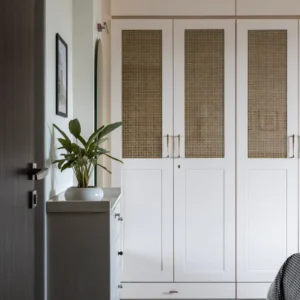
Courtesy: Greenhatcch Studio
Clutter is rarely accidental. It is evidence of routines that might become unaccounted for, and transitions that are unresolved.
To an extent, users can shy away from the problem. Perhaps cluttering is a space planning problem influenced by our behaviour.
In that case, designing storage is less about eliminating mess and more about absorbing it gracefully. Planning for the inevitable, not the ideal.
Framing Space, Not Just Filling It
Courtesy: Greenhatcch Studio
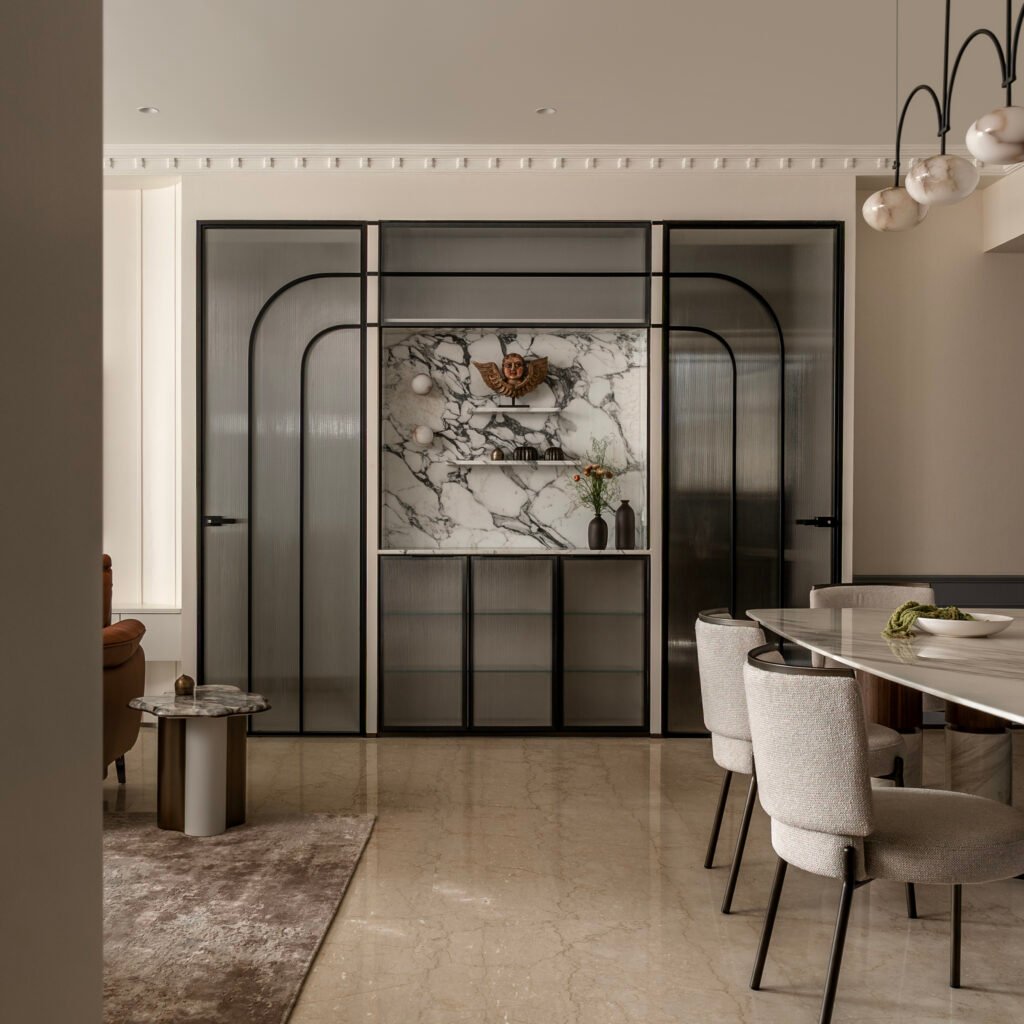
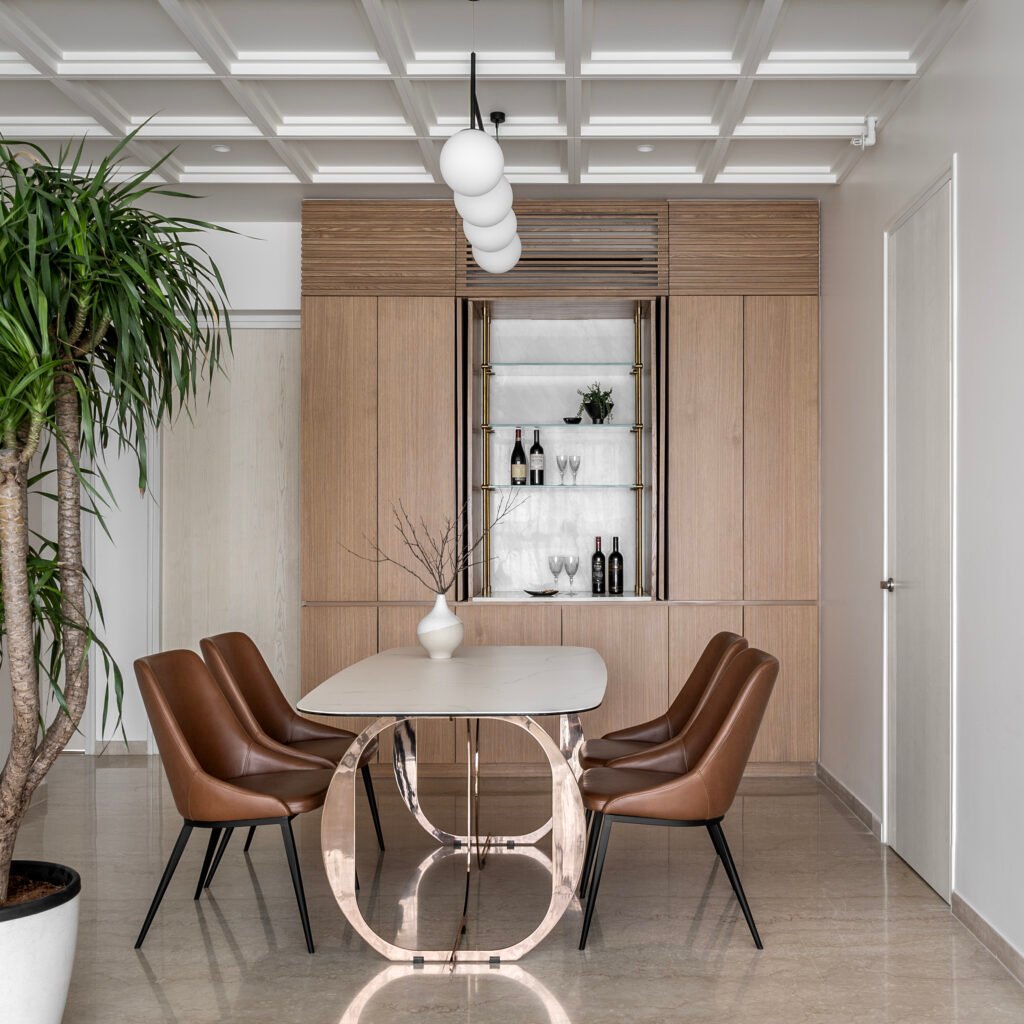
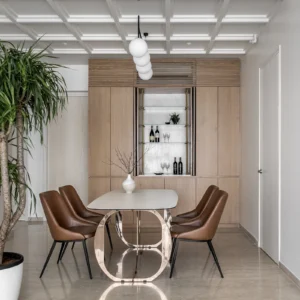
Storage quietly defines spatial hierarchy. It draws boundaries between public and private, conceals what must remain backstage, and reveals what deserves attention. In doing so, it becomes an architectural tool, not just furniture.
Cabinetry today carries more than belongings. It absorbs appliances, wiring, and services, resolving technical demands without disrupting the visual field. These integrations often go unnoticed, which is precisely the point.
In the end, storage is about calibration, of use, of movement, of visibility. When done well, it disappears into the experience while holding the entire space together.