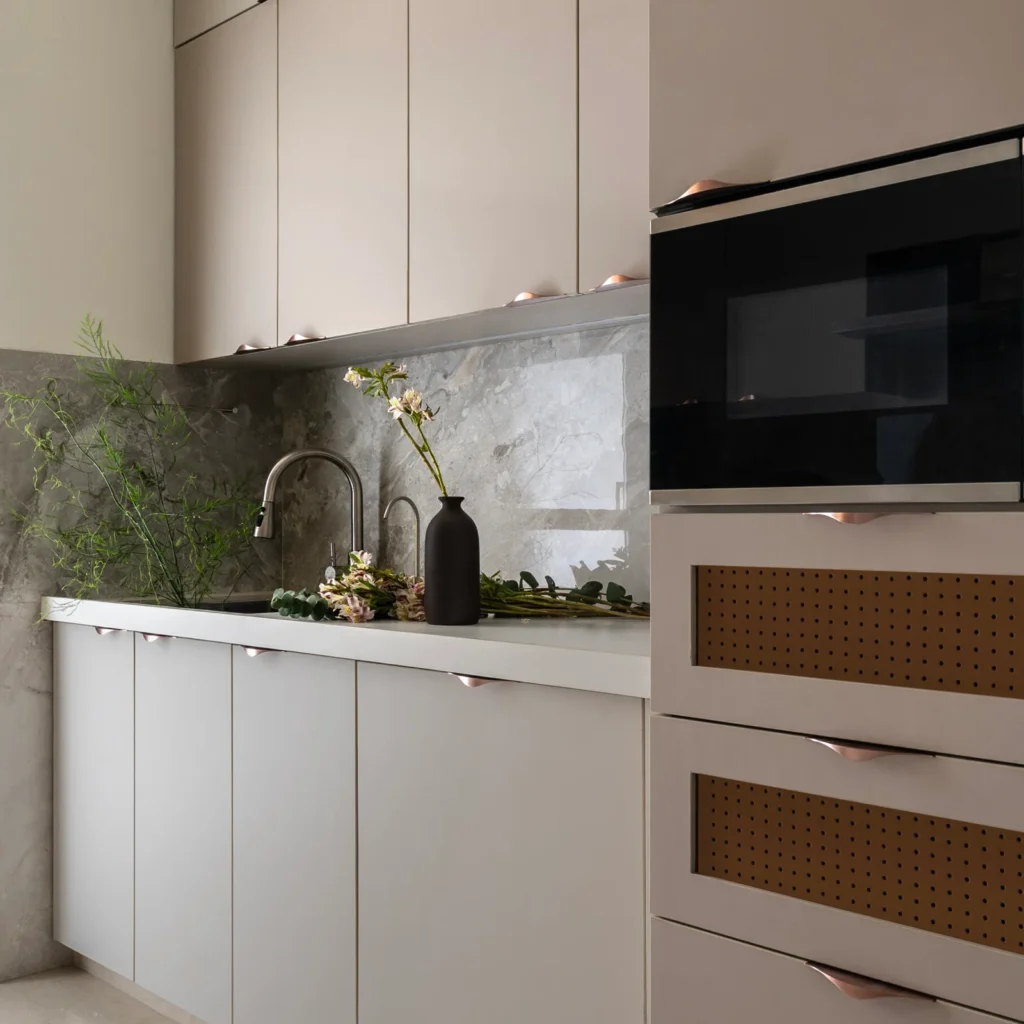
Transitional spaces are often restricted to circulation: paths that move people efficiently from one point to another.
Way larger buildup to this statement. Establish a premise of being given a space that allows halting but not comfort. Or perhaps a space that provides comfort with relatively less amount of halting.
Yet, within this movement lies an overlooked distinction: the difference between a temporary pause and a pause point.
So really, what’s the difference?
Which ones do designers choose and where?
Between wavering and halting:
A temporary pause is incidental. It occurs out of necessity, waiting, passing, adjusting pace. It is brief, functional, and often unsupported by the space itself.
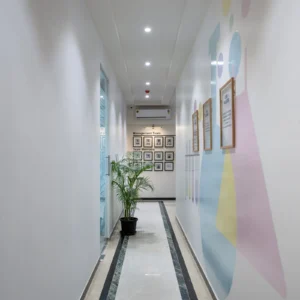
A pause point, however, is intentional. It is designed to hold presence. It invites occupation without demanding it. These are moments where movement slows down not by constraint, but by choice.
Courtesy: Greenhatcch Studio
The difference lies in how space chooses to respond to behaviour.
Anticipating the informal:
A pause point is never incidental in planning.
It can arrive from a place of regulations, crowd control or even as a buffer in a long chain of programs.
It need not be defined by boundaries. When circulation initiates with a larger subset of people, a nook or small niche of any space acquires a sort of informal nature to its existence.
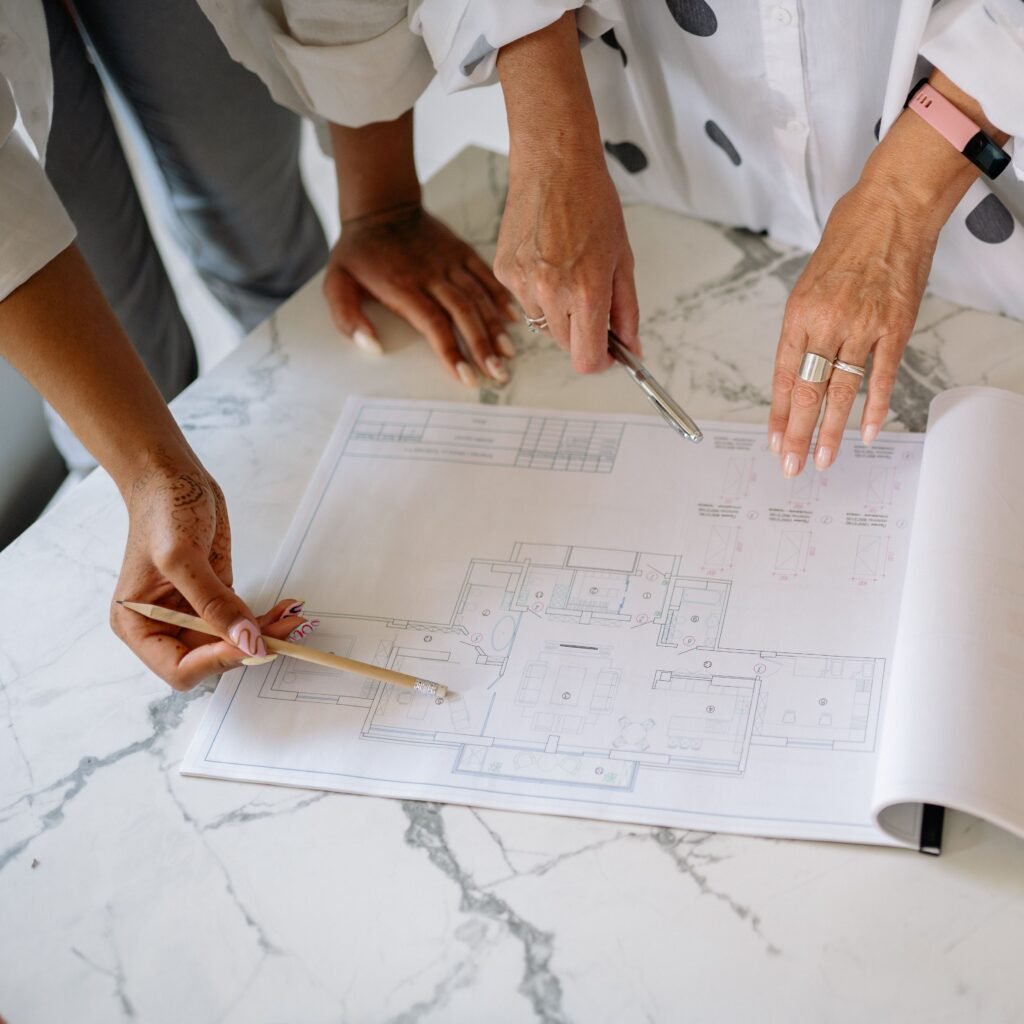
The role of a designer is to anticipate how people redefine an area beyond its designated label.
Efforts then go into ensuring there is no resistance to such behaviour and at the same time, these surges of dynamic activities do not hinder the safety or functional non-negotiables
How we contribute:
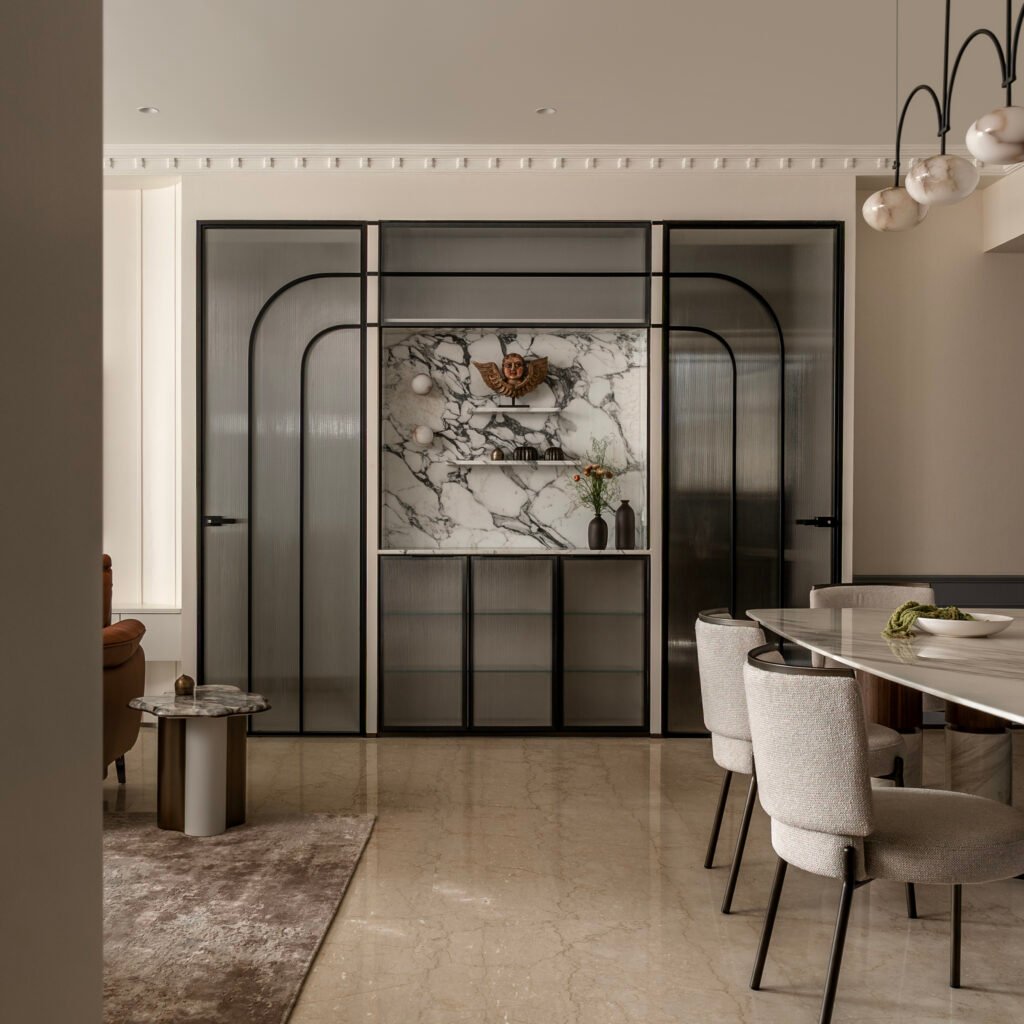
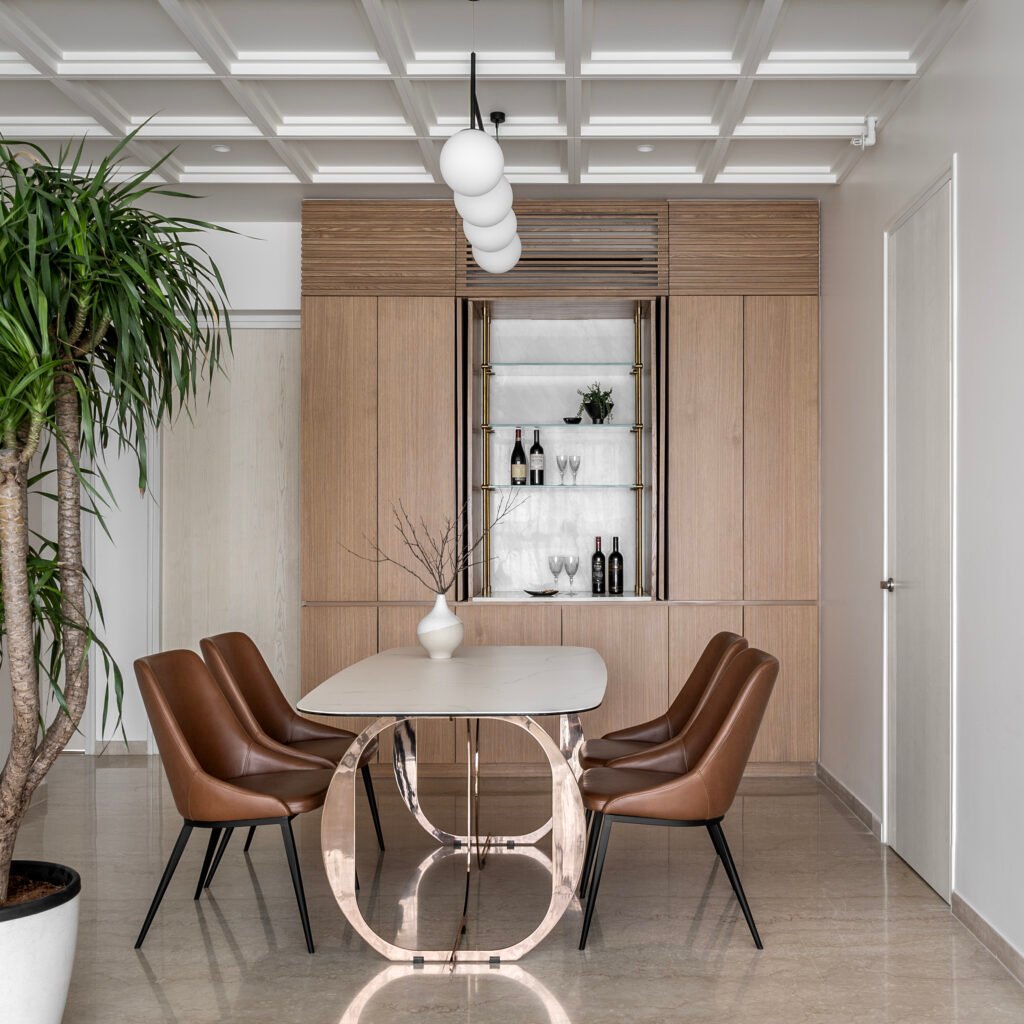
Pause points are identifiable through subtle spatial cues. Slight expansions in width, shifts in light, changes in material, or the introduction of edges that can be leaned against or sat upon. These gestures signal possibility.
They acknowledge that movement is not always linear—it can pause, overlap, and engage.
In contrast, purely transient corridors resist occupation, of all kinds. Their proportions remain tight, their surfaces continuous, their intent singular. They prioritise flow, often at the cost of interaction.
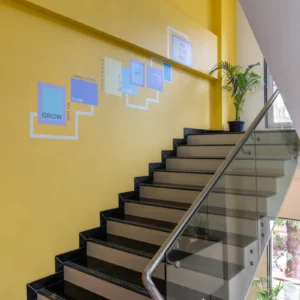
Environmental graphics help tremendously. These include colour, texture, signages and similar forms of legible representation at giving life into a liminal area.
Courtesy: Greenhatcch Studio
It makes pausing, an interesting and worthwhile experience: pulling all outside of the micro climate and pace of work.
But the opportunity lies in blending these two conditions. Not every corridor must become a destination, but neither should it reject life entirely. By embedding moments of pause within movement, transitional spaces begin to operate as social buffers.
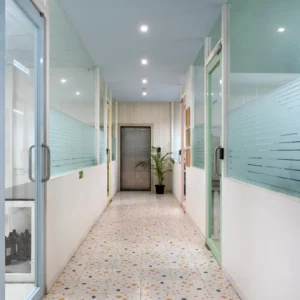
A widened threshold near an entry can allow a conversation to unfold without interrupting circulation. A spill-out zone from a workspace can encourage informal exchanges. Even a change in ceiling height can create a subconscious cue to slow down.
The emotional quotient:
Perhaps they are an act of rebellion.
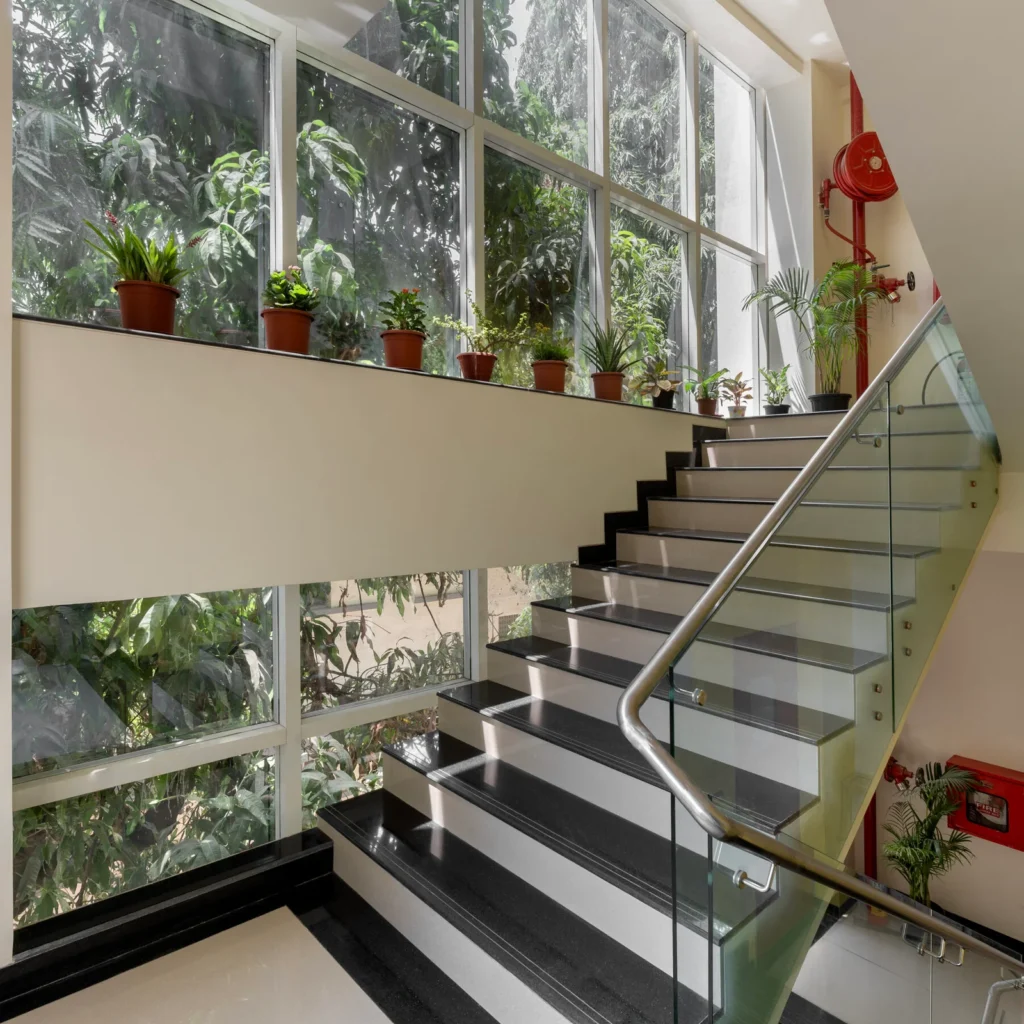
We’ve seen staircases turn into effective meet-ups for socialising.
Breaks, small spill overs or even controlled gathering at one point and suddenly providing just the right amount of privacy for a personal call or occupation.
Codes ensure ventilation and light never feel inadequate here. Users then associate a different ownership to such areas thereafter.
Such spaces become active without being over-designed. They host interactions that are unplanned yet essential: brief conversations, moments of reflection, or simple observation.
Courtesy: Greenhatcch Studio
Overview:
Such is the paradoxical nature. At any point of time, whether as a group or through a singular arrival, the passing of time is imminent.
Users will remain in tune that they can waver, but not remain here. As designers, smaller touches only encourage this nature more.
When pause points are carefully introduced within systems of movement, corridors and foyers evolve beyond connectors. They become environments that support the social rhythm of a space efficiently and with purpose.