Building Luxury without a precious collection

Decoding the term:

Luxury, for the longest time, was easy to identify.

Arriving aloud and polished 

Often presenting as unmistakably present.

And lingering beyond the room through thoughts, displays, recommendations and conversations…


Story so far:

Over the last few decades, however, the very idea of luxury has expanded. We certainly feel that perhaps it has happened too quickly. It has moved from being a condition of making to a style of display. 

Amplified by media and accelerated through digital platforms as some sort of movement, it often appears as an orchestral composition of abundance: 

More materials, more layers, more visual cues competing to signify value.

More = Luxurious quickly became the norm even before it was put to the stand.


OBJECTS over experience:

We try to gauge why this occurred in the first place. The architectural practice today does a profound job at intersecting with other domains of design.

For the sake of convenience, or the larger justification of a program or lying somewhere within the briefs, we as design curate fuller visuals for a space.

Designs we spend time on become living performances sometimes, with every element functionally interacting with the users in the decoded style.

Here is where objects intervene into the picture. 

Bounding rooms we design contain the experience…

While objects within them simulate that very play, through activities, narrations and simple observations sometimes.


Necessary revisions:

In this landscape, luxury risks becoming legible at a glance but forgettable in experience. When everything speaks at once, very little is actually heard.

But what if luxury did not rely on accumulation?
What if it was allowed to be quieter, more deliberate, even slightly withheld?

A different reading begins to emerge, one where restraint becomes the primary tool. 

Where the absence of excess is not a compromise but a position. Here, materials are chosen not for their immediate impact, but for how they age, how they settle, and how they participate in the life of the space over time.


What luxury signals 

While it is natural to incline towards these definitions, luxury doesn’t ever have to be synonymous in excess. Observing restraint, both in composition and additions to the space allows for a much more singular and refined story to unfold. 

Some of our clients have helped us perfect and grow into this very understanding.

The Roy residence remains a prime example of this practice.
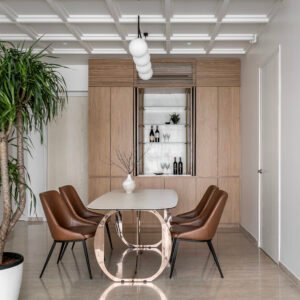
The Roy Residence
Courtesy: Greenhatcch Architects

Repetition of trusted elements goes beyond materials.

The story we chose to share works through textures, rich quality and sophistication. The common gathering is pristine not because of its objects around, but because it exemplifies the space and the negative masses.

Taller head-rooms with patterned ceilings add clean lines to a layout of rich contrast in materials and surfaces. More importantly the project doesn’t endorse the idea that luxury needs to be densely filled or crowded to shine through.


Redefining with context:

This version of luxury does not avoid richness; it redistributes it. Into proportion, into detail, into the way light meets a surface or how a junction resolves without calling attention to itself. It values clarity over decoration, continuity over contrast, and intent over indulgence.

In many ways, it asks for more discipline than display ever could. To hold back, to edit, to trust that a space does not need to prove itself instantly.
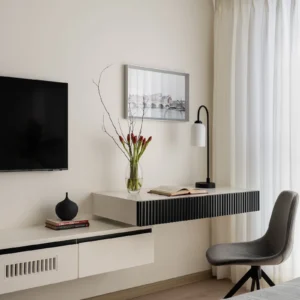
The Roy Residence
Study
Courtesy: Greenhatcch Architects

Timelessness, then, is not a visual outcome but a behavioural one. It is embedded in decisions that remain relevant beyond the moment they were made.

Perhaps the real shift lies here:

Luxury is no longer about what is collected, but about what is consciously left out.
When did Glass become the default?

Glass today is rarely questioned. What appears as the obvious choice for façades pretty often extends to partitions, offices, even homes. But this rampant “default” is surprisingly relatively recent.

Today it signals many things, often in a not so transparent but somehow inherent manner, often without interrogation.

Somewhere along the way, we feel its adoption became less of a choice and more of an inheritance.

Origins 

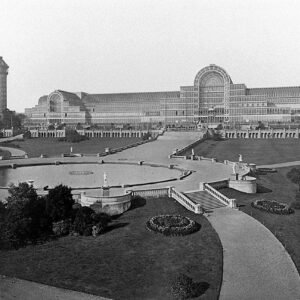
The architectural use of glass expanded dramatically with industrial advancements in the 19th century. The Crystal Palace (1851) demonstrated how glass could move beyond openings to become an entire structural skin.

Image source: Wikipedia

References like Transparency: Literal and Phenomenal by Colin Rowe and Robert Slutzky, and essays on ArchDaily and RIBA Journal, further trace how glass evolved from innovation to ideology, eventually embedding itself as a global architectural language.

In India, the proliferation of glass façades accelerated alongside liberalisation and globalisation in the 1990s and early 2000s. Corporate architecture began aligning with international aesthetics, supported by a rapidly expanding ecosystem of façade engineering, glazing systems, and material supply chains.


Through Symbolism and Meaning 

Glass has been given a voice to represent more than enclosure. 

Earliest renditions began to signal openness, progress, and institutional transparency. Buildings like Seagram Building framed corporate clarity, while the Apple Park uses glass to dissolve boundaries between inside and outside.

Yet psychologically, constant visibility alters how we occupy space. Transparency, when continuous, can feel less like openness and more like exposure, quietly reshaping behaviour, comfort, and spatial hierarchy.


The Contradiction 

Despite its visual lightness, glass often performs poorly in many climates. High heat gain, glare, and dependence on mechanical cooling create long-term inefficiencies. 

Image source: Pexels
Courtesy: @Arefin Shamsul

In the Indian context, fully glazed façades frequently contradict climate-responsive design principles, especially in regions with intense sunlight, where comfort is achieved not through exposure, but through calibrated protection.


What’s Being Ignored

The persistence of glass is far from accidental. It is supported by industry, familiarity, and aspiration.

Most importantly, decades of efforts fueled into refining accessibility and procurement.
This reliance has grown strong enough to sideline more nuanced, climate-responsive approaches.

There is a certain inertia at play. Questioning glass means rethinking systems, and that shift, while necessary, is rarely immediate or convenient.


Larger Dilemma:

Rather than focusing solely on replacing materials, the opportunity lies in rethinking spatial strategies.

While the glass industry operates at a massive, established scale, meaningful change does not always require dramatic material shifts. It begins with design intent.

Image source: Pexels
Courtesy: @Pixabay

If commercial spaces can move beyond flat visual statements and engage with section, layering, and climate, the expression of architecture becomes richer, more responsive, and less dependent on a single material narrative.


Overview:

Modern need not translate to uniform, reflective skins. True modern thinking is responsive, contextual, and efficient. The widespread use of glass today suggests a drift toward visual sameness rather than innovation.

Perhaps the more relevant question is not whether glass works, but whether we are still actively choosing it. Or have these decisions become inherited defaults: 

Repeated across projects without pause, simply because they have long been accepted as the norm?

‘Cloud Dancer’ moving through lived spaces!

-Beyond neutral: a study in emphasis.


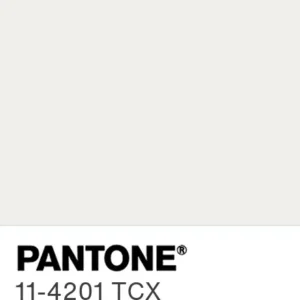
Pantone announced “Cloud dancer” as the colour of the year 2026, with designers, artists and almost everyone showcasing a diverse palette of reactions.

The official release positioned it as a restorative, clarifying white: an atmospheric neutral intended to reflect a collective search for calm and reset. (See Pantone’s announcement on pantone.com.)

This announcement rightfully spotlights the subjective nature of visual elements seen, perceived and felt all around us.

Cloud Dancer
Courtesy: Google images

Is white a choice or the default?

White is often treated as the ‘default mode’. Yet declaring it plainly as “neutral,” risks overlooking the fact that every white carries temperature, density, and reflectivity. 

The question, then, is not whether white is a colour. It is whether we have mistaken familiarity for neutrality.


On Being Selective With Colour:

Paul Rand once remarked, “Design is so simple, that’s why it is so complicated.” 

Selection may appear effortless in a finished product, yet the resolutions and decisions encompassed throughout a creative journey rarely feel simplistic..

Choosing a shade, especially one that seems ‘default’ can often be an act of precision for us.


What does a space want to convey:

It has made for an argument on whether white or a particular variant of it demands a certain attention or simply alters how perception manifests in a space.

Sometimes to expand a volume,

Or to quieten a busy program, 

Or to let material speak first.

As designers, we would have consistently resorted to a certain “white” for countless reasons that alter from brief to brief.

Courtesy: Greenhatcch Studio

Using the right amount of ‘white’:

Often known as an excellently safe yet flexible colour, white and its family have been conscious allies in our decisions.

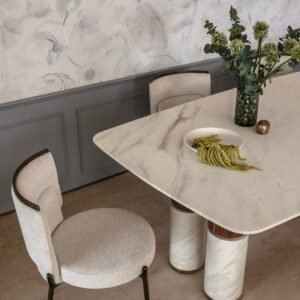
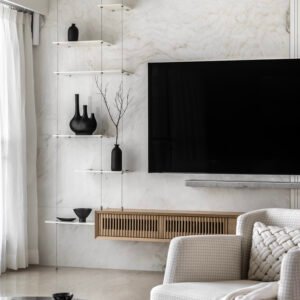
Cloud Dancer takes a tone typically associated with restraint and becomes a tool for emphasis. It does not withdraw into void; it behaves as a backdrop.

Effectively, this discussion is null without considering the social perception and landscape surrounding colours, which influence our minds and choices subconsciously.

Where Cloud dancer separates is weirdly in its paradox. White often associated with restraint used this way strongly advocates for reasonings and depth of thought.


Going Beyond the Shade:

Certain spaces often make us feel that no other texture, tone or even colour could’ve been tailor-made compared to the present visual, a credit to the designers’ commitment.

The larger perspective extends beyond Cloud Dancer or any singular tone. It questions how we assign roles to colours: when does a surface behave as void, and when does it operate as backdrop?

Courtesy: Greenhatcch Studio

After-thought:

The discussion, therefore, is not about elevating one colour over another. It is about recognising that subjectivity does not negate function.

Cloud Dancer feels familiar because designers have relied on it for years without naming it. Perhaps the real contribution is in prompting us to reconsider and broaden our understanding on what feels effortless.