A project often begins with comforting certainty. As designers, our trusted toolkits consist of a site, a brief, a budget, and combining these with experience and insight leads us somewhere in the distance to a finished space waiting patiently to be realised.
At first, most problems appear solvable through design. Afterall, that is what this training incentivises us to think about.
Simple enough. Trusted enough. We too are firm believers in the potential held by intentional, contextual and relevant design. But then the project does begin, welcoming a plethora of newer challenges we end up taking head on.
Some of their outcomes don’t actually call for outcomes that are graphical, data driven or even visual. As timelines unfold, an entirely different category of challenges emerges. But throughout this commitment that we stick to, there simply cannot be a problem that we don’t strive to address and collaboratively resolve.
Too Many Opinions; Too many Expectations
Projects rarely suffer from a lack of ideas. Inspiration that feels grounded to the aspirations presented to us can be gathered from endless sources.
A detailed brief and ambitious stakeholders in fact tend to accumulate ideas. The challenge is rarely generating solutions. It is identifying which voices move the project forward and which simply add volume to the conversation.
Sometimes, the final drawing ends up acting as a collage of the ideas that sprouted along the way: Sometimes it resembles none of them, instead turning into a profound resolve that learned from everything that came from the previous iterations.
We might be the one designing, yet it is ultimately the clients that recognise when a drawing is “final”. The way we manage preferences softly also drives forward the pace of this.
The Rarely Understood Time
Time behaves differently for everyone involved. Some projects already arrive with a stopwatch. Whether as an emergency, a non negotiable or a situation that in turn actually narrates the brief.
Certainty, especially in such situations becomes desired. A contractor needs decisions, consultants require coordination, and procurement follows its own calendar entirely.
Many design decisions are not about what should happen, but when it should happen. When we pick up a project, we come with an understanding of being answerable. Clients might not be able to grasp the pace of design, even less the pace of actual construction. Besides that, although time moves the same way for all, we all often fall under very different sets of the 24 hour clock.
Creating alignment towards locking decisions becomes a necessary perspective we introduce. This however is not an excuse for compensating in the final output, rather a larger pressing challenge.
The Maintenance Problem
Every project imagines a perfect future version of itself. Reality introduces cleaning schedules, wear and tear, replacements, servicing, and daily use.
Our roles follow a very complicated curve across the axis of time. While we stay incredibly involved with a project across both its design and building life cycle, we take a sharp dive in presence once the space is ready to welcome its host.
We have curated an experience that spans generations of use, adaptation and activities. We understand its limitations, potential and probable issues that could sprout with time.
It is us who inform, demonstrate and translate a very transparent view of the outcomes that we handover.
The “Architect, Fix It” Problem
At some point, every challenge arrives at the architect’s desk.
Budget concerns. Coordination gaps. Scheduling conflicts. Communication breakdowns.
Not because they originated there, but because the architect often sits at the centre of the conversation.
The role quietly expands from designer to translator, mediator, organiser, and occasionally therapist.
What Happens Beyond the Drawings
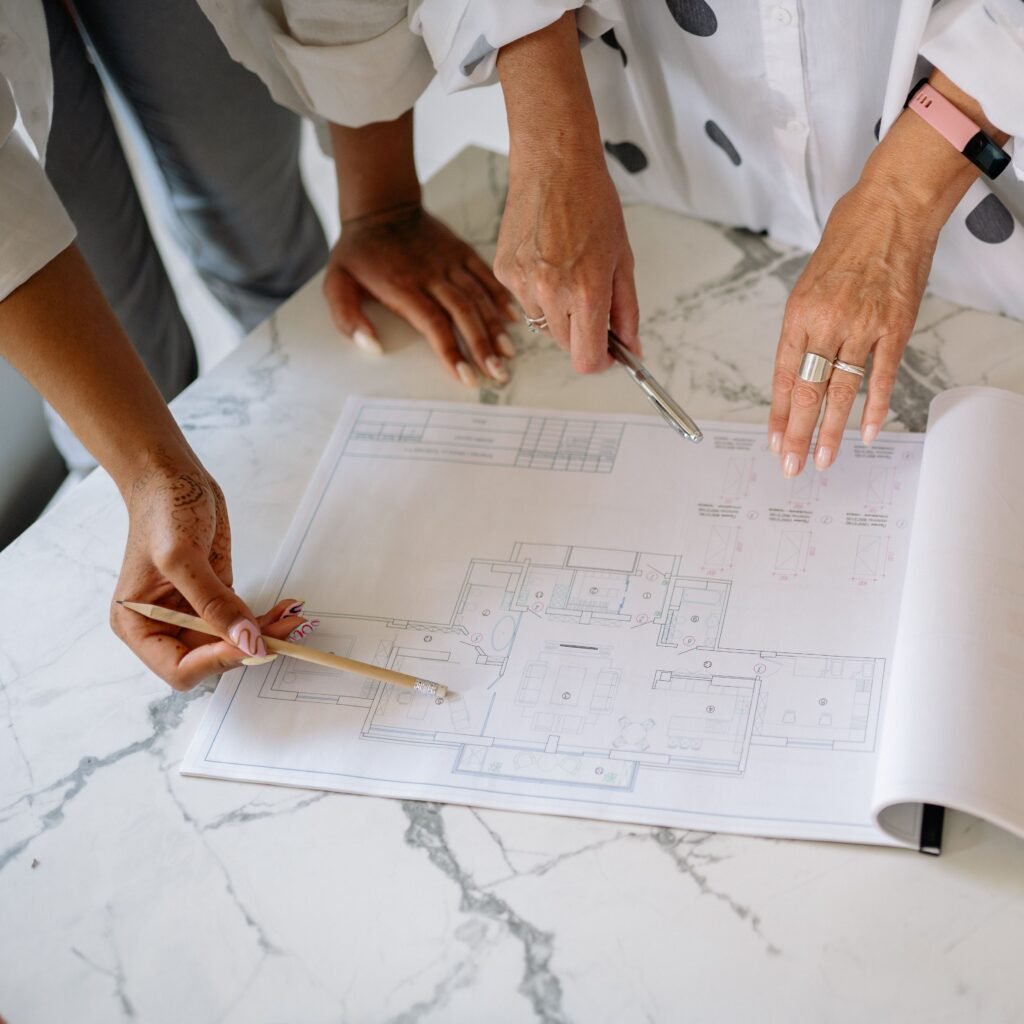
This is where much of the profession actually operates. Through alignment, communication, sequencing, expectation management, and countless decisions that never become visible in the final space.
The irony is that some of the most valuable architectural work is precisely what disappears from view. Not every problem requires a design solution. And perhaps that is one of the profession’s lesser-known responsibilities.
While architecture may be represented through drawings, it often progresses through conversations, judgement, coordination, and restraint. The finished space reveals what was built.
But the process rarely reveals everything that was resolved to get there. Oftentimes, we’ve realised how what was discarded was perhaps just as meaningful to the service we offer.