-How a Temporary Cathedral Became a Testament to Collective Resilience
Where the endeavour began:
Some projects begin with operations on scale or site.
But some must respond to discomfort.
Through its incubation, process and even execution, certain ideas evoke a sense of intrigue.
This one challenges the norm unapologetically, flipping the general mass that we constitute when referring to a building.
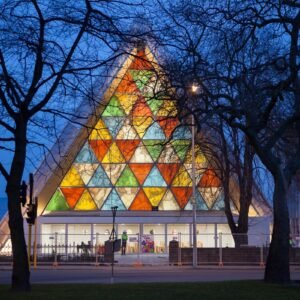
Project: Shingeru Ban Architects
In Conversation with Shigeru Ban:
From humanitarian shelters to institutional structures, his work has always been a mode of service and attempt to restore dignity for the ordinary.
Even here, his relevance remained philosophical more than formal:
- Value does not originate in expense.
- Structural clarity can feel deeply humane.
- Temporary architecture can carry emotional permanence.
The Experience of Lightness:
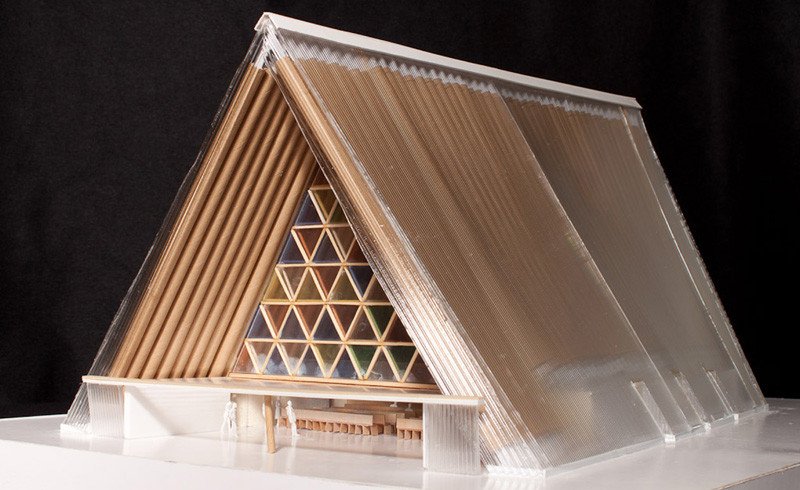
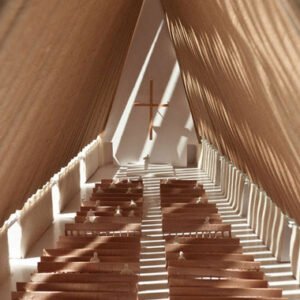
What if something associated with packaging could instead hold space? What if light, rather than mass, became the primary building element?
Standing within such a space, one becomes aware of small things. The material feels approachable, almost familiar.
Yet it has transformed. In strength, stability and its story.
You begin to pay attention and linger differently now.
Other conversations that quietly shifted:
Not every staggering breakthrough has to be vivid to our attention or niche.
Beyond structural experimentation, the project unsettles a few habits of thought:
- That durability alone determines architectural worth.
- That refinement must appear heavy or expensive.
- That sustainability is a technical checklist rather than a sensory condition.
It also repositioned the scale, influence and impact of craft, enabling a larger population to explore beyond the ‘convention’
A Measured Offering: Overview
By working with cardboard and light, the project reduces itself to essentials — surface, structure, atmosphere. The Cardboard Cathedral was never trying to impress.
It sought to refine the meaning behind its program, in an evolving manner.
The intention was not to dramatise fragility, but to understand it. If cardboard became the medium, light became the language.
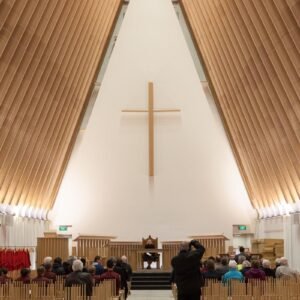
Project: Shingeru Ban Architects